


John Henry: The Shirt I Made About America
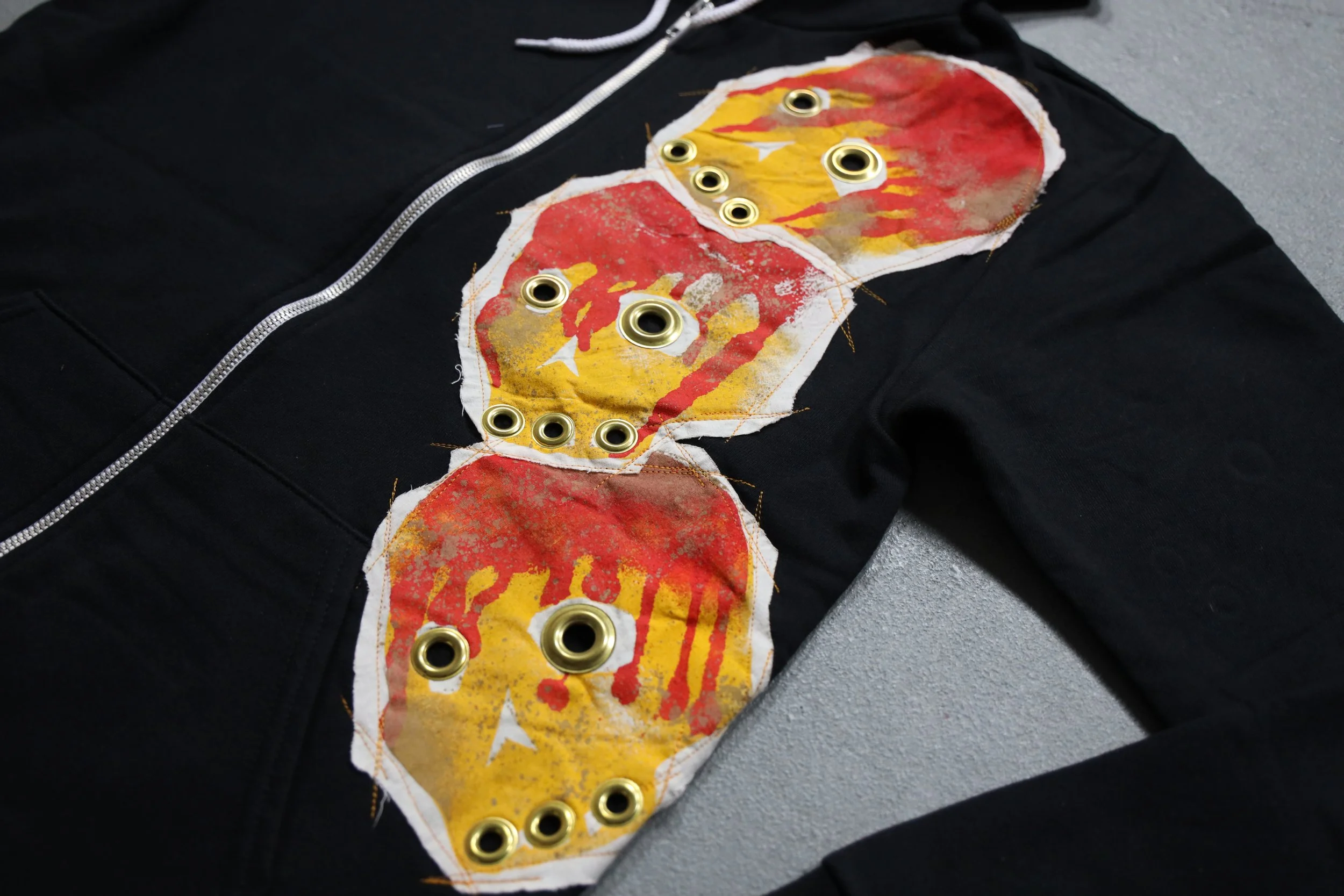
Made in 2002 for a fashion show that never happened. A burned flag, a folk hero’s fist and a lyric I still stand behind.
This one goes back to 2002, right after I moved to Los Angeles. I was somewhere around 18 or 19 and totally on fire.
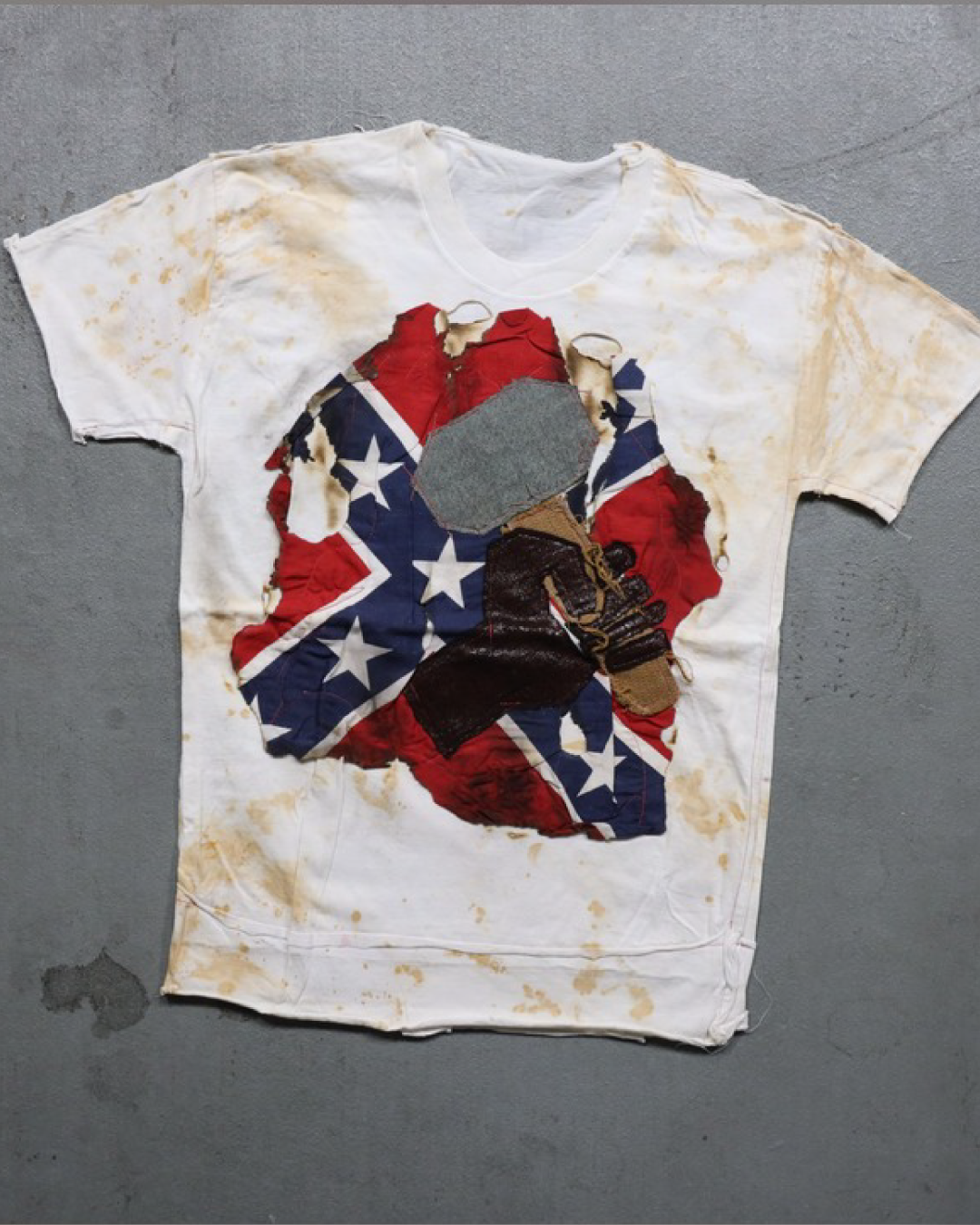
John Henry one-of-one t-shirt by Andrew Hanson
MoMo and a show that never was
Not long after I got to LA, I linked up with Jerell Scott, who later went on to Project Runway. We met through MoMo, a clothing store that used to sit on Beverly and Stanley, where I was working at the time.
I was invited by Jerell to participate in a fashion show. Unfortunately, it never was. It fell through, and that's still how I describe it. But the work I made for it is still here and just as powerful today, in my opinion. But maybe I am biased. Ha!
That was two years after the first F shirt. Read where it all started →
The shirt
It's most likely an American Apparel shirt, the 2001 style. I refit it, which means I sewed up the sides and the arms so it fit tight. That's how we wore them back then.
On the front, I appliquéd a Confederate flag bandana. I have no idea where I got it. Then I burned holes in it and cut holes in it.
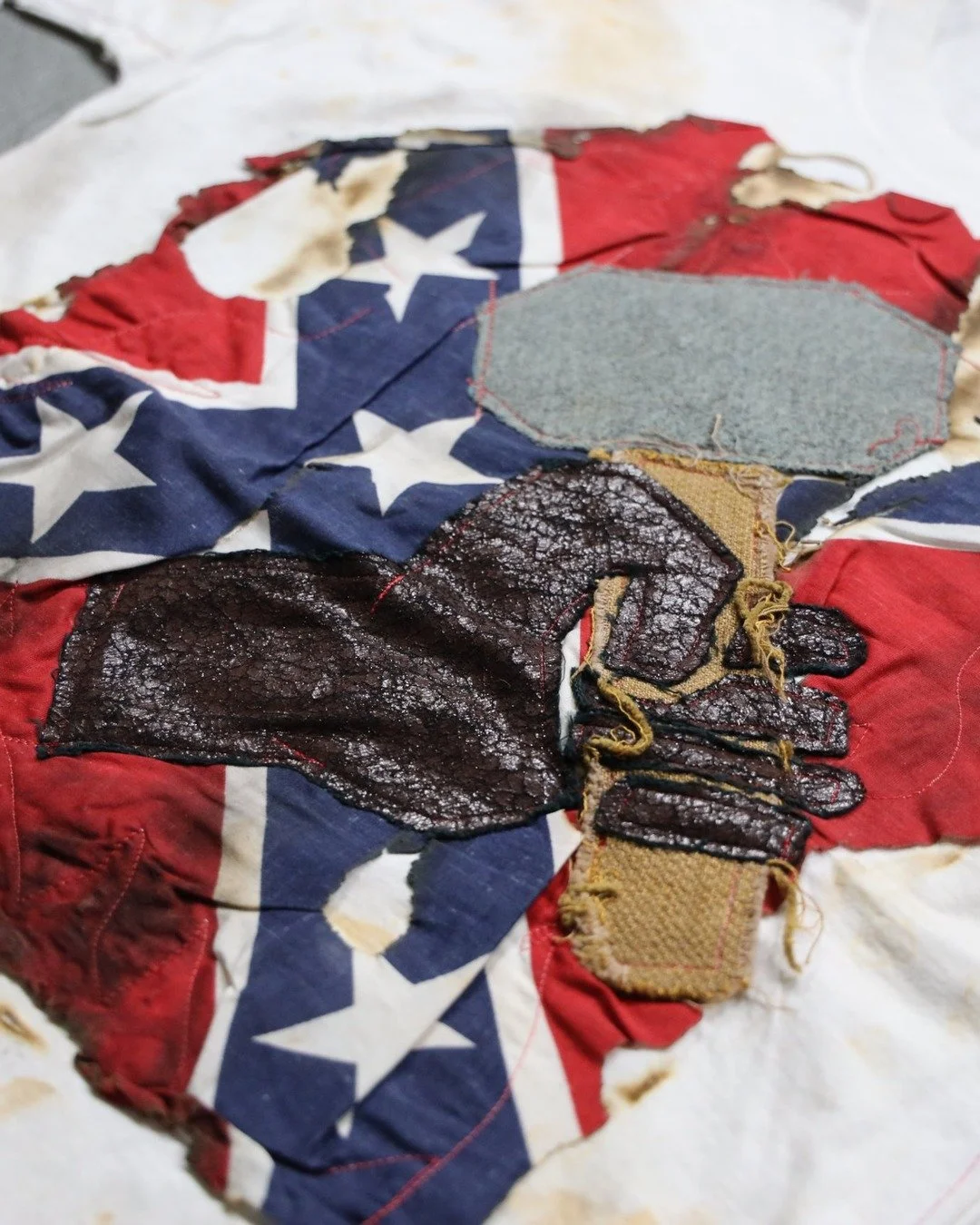
Close-up of the appliqué and distressing
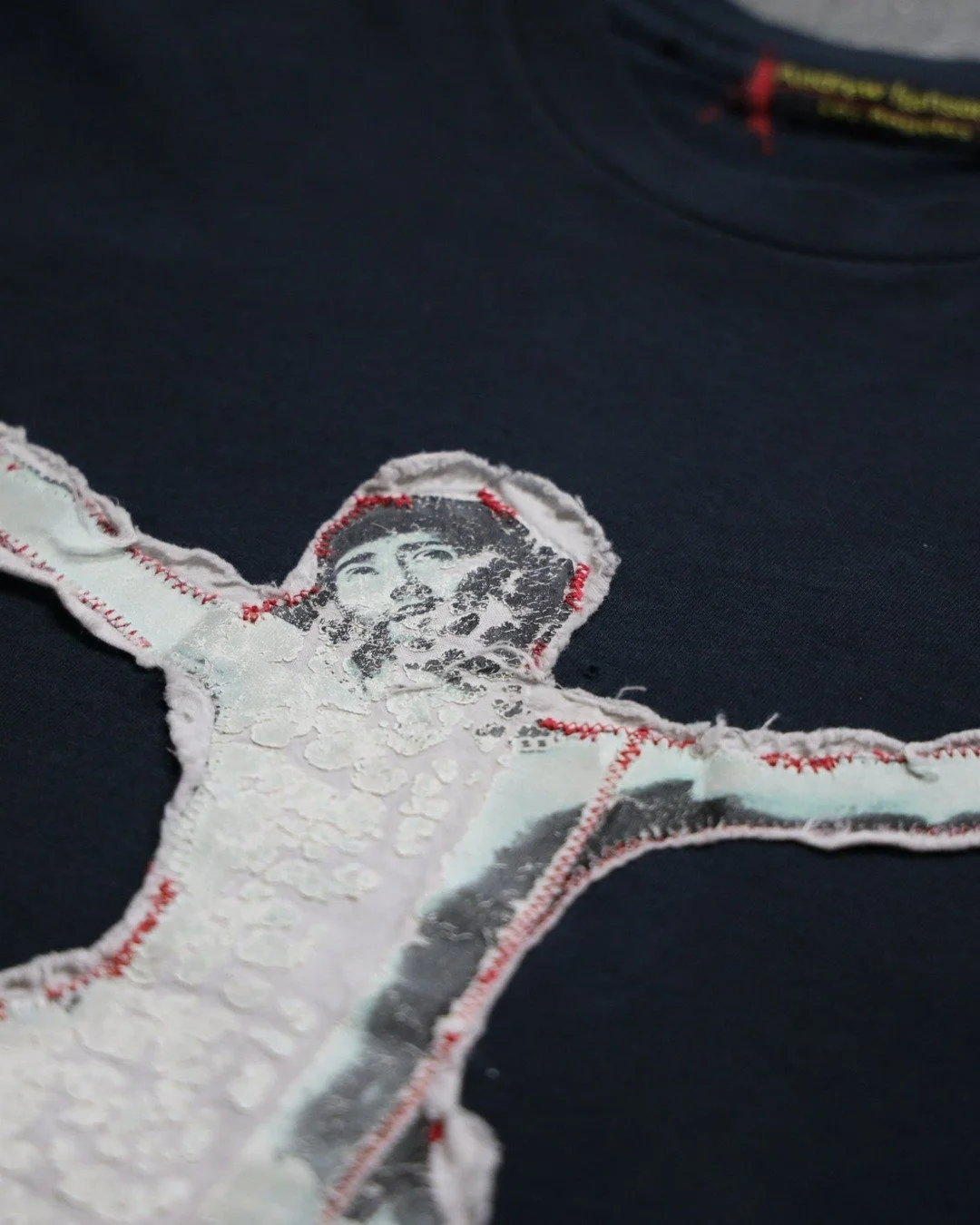
On top of the flag sits John Henry’s fist, in the shape of the power-to-the-people fist, holding a hammer. The hammer is cut from upholstery fabric. The stitching on the back is chaotic, reminiscent of fire or a fireball, which is why the flag is burned. The shirt also has actual rust all over it. All this, in my opinion, makes for a pretty strong statement. At least young me sure as hell thought it did.
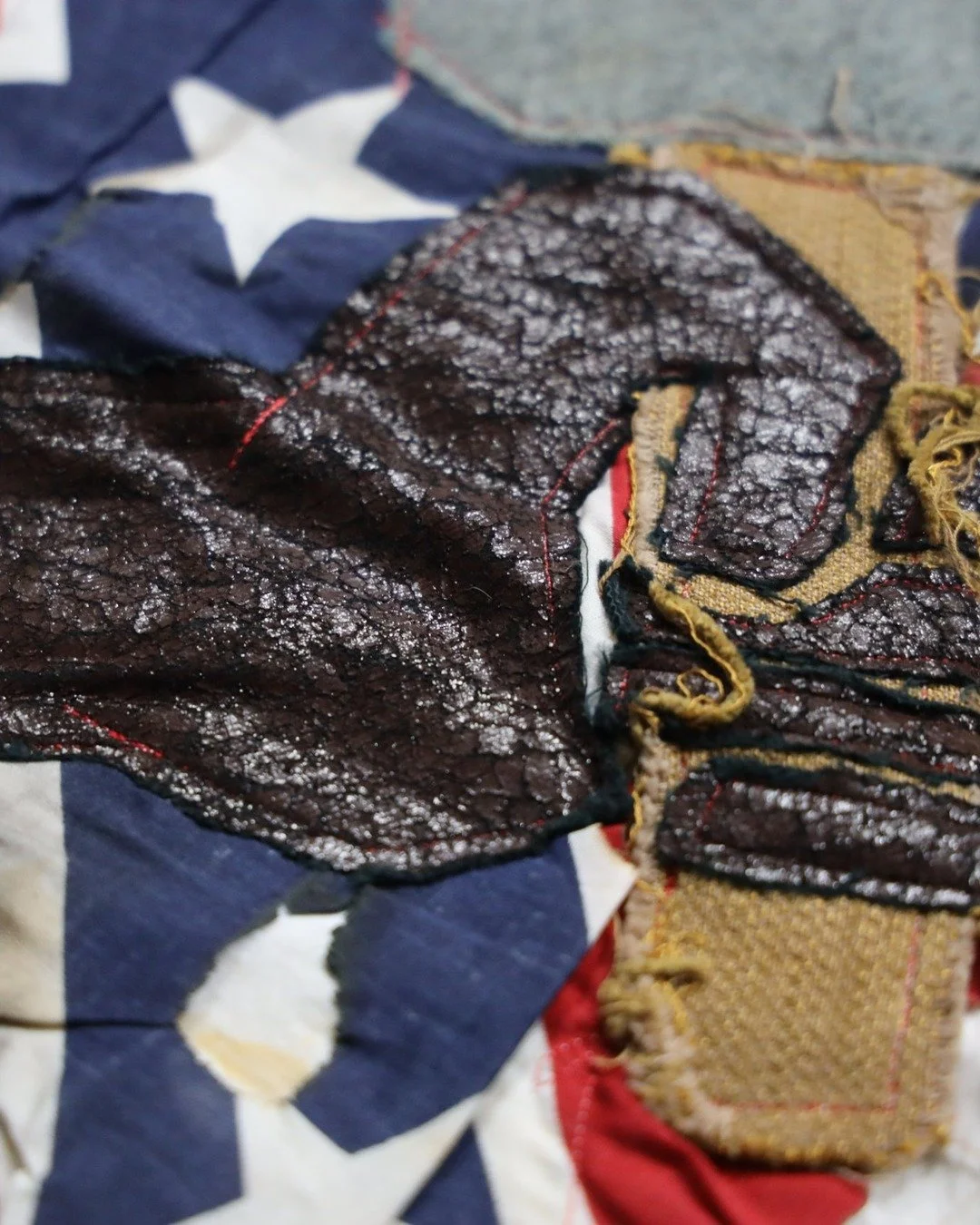
Close-up of the power-to-the-people fist and hammer
If you don't know John Henry, he's an American folk hero, the steel-driving man who raced a machine and won. I highly recommend you check it out. Johnny Cash has a pretty good song about it too. Give it a listen if you get a chance.
The back
On the back is a heat transfer with a verse from Anti-Flag, a band I was really into at the time. The verse calls out racism and blind nationalism, and I still stand behind it. I put chaotic stitching all around it, again, to look like or reference fire.
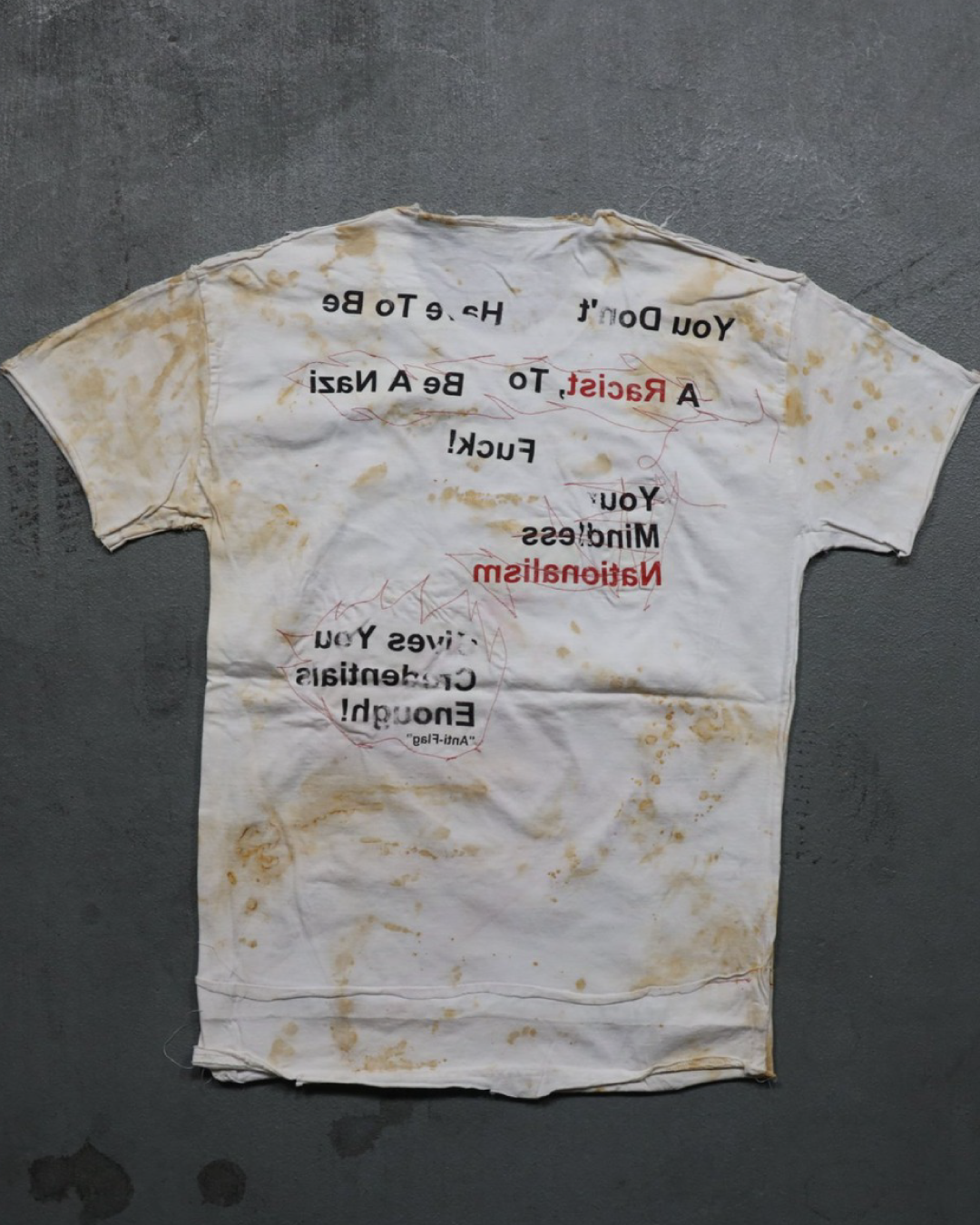
Anti-Flag lyric on the back, heat-transfer print
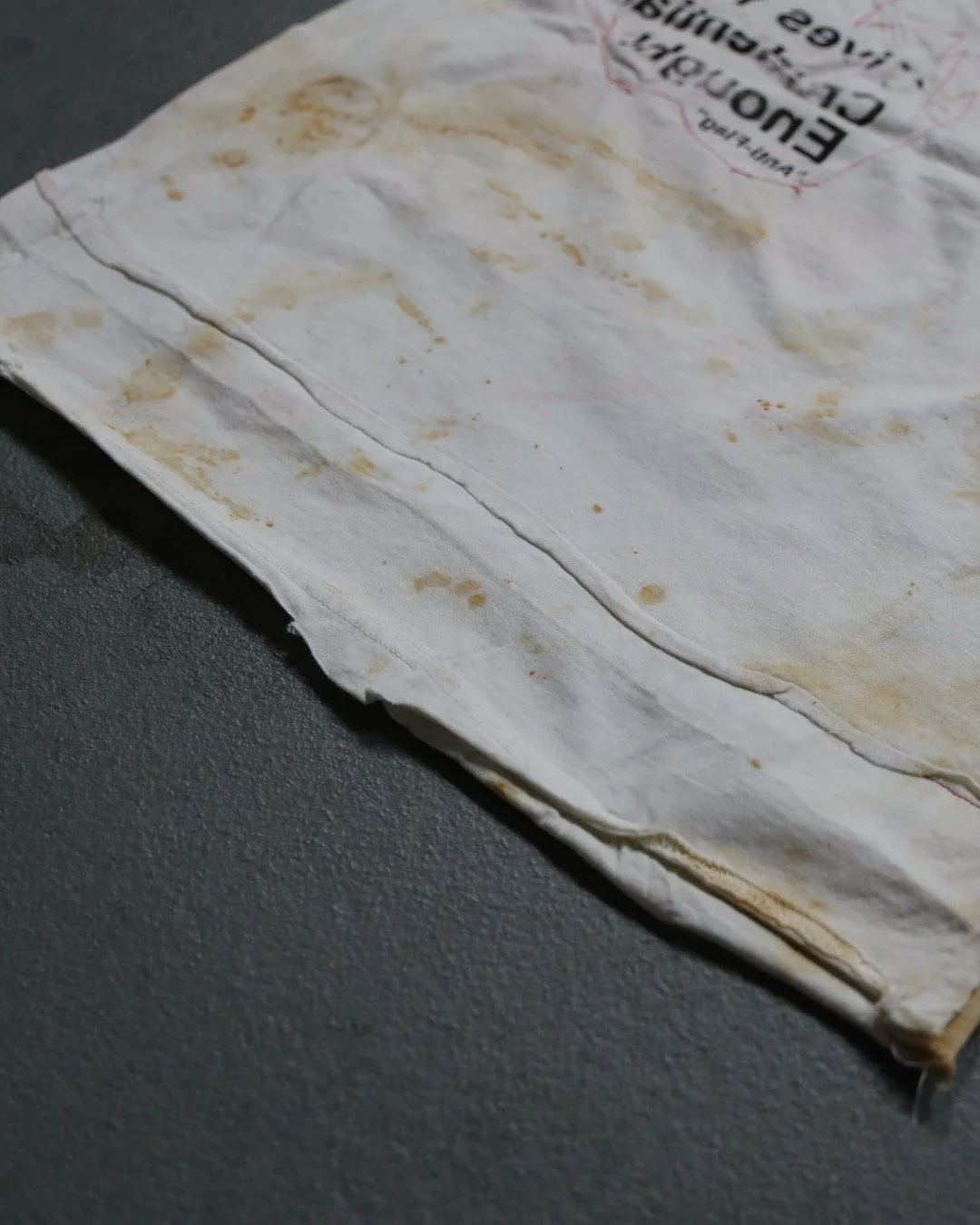
Bottom sweep of the John Henry t-shirt
Why America
That whole collection was about early American history. It drew from the blues and from American folklore, and it was made while the country was heading into war. This shirt was my way of getting that out. Because music, as well as history, has always been a powerful muse for me, I really wanted to convey something powerful and close to my heart at the time. Without saying too much, I am pretty confident I captured that.
Your turn
What's something you made, or wore, to say what you couldn't say out loud?
Tell me in the comments.

The Not Real Shirt
2000–2001. High school. One of the very first shirts I ever made, and the first time I hand-dyed a t-shirt. Every letter of “Not Real” is cut from something in my life, from a friend’s jeans to an old R2-D2 shirt.
The first dye
The year is 2000 or 2001. It’s a little foggy, but I’m in high school, and this is one of the very earliest shirts I ever made. I believe this was the first time I hand-dyed a t-shirt. My dad showed me Rit dye, and it changed the entire game. I’m sure I tie-dyed as a kid, but it had never crossed my mind to dye my own shirt. This shirt used to be bright yellow. If you look closely, you can still see a white stripe running through the sleeve and the center of the chest. It was my take on tie-dye, a way to give it an accent.
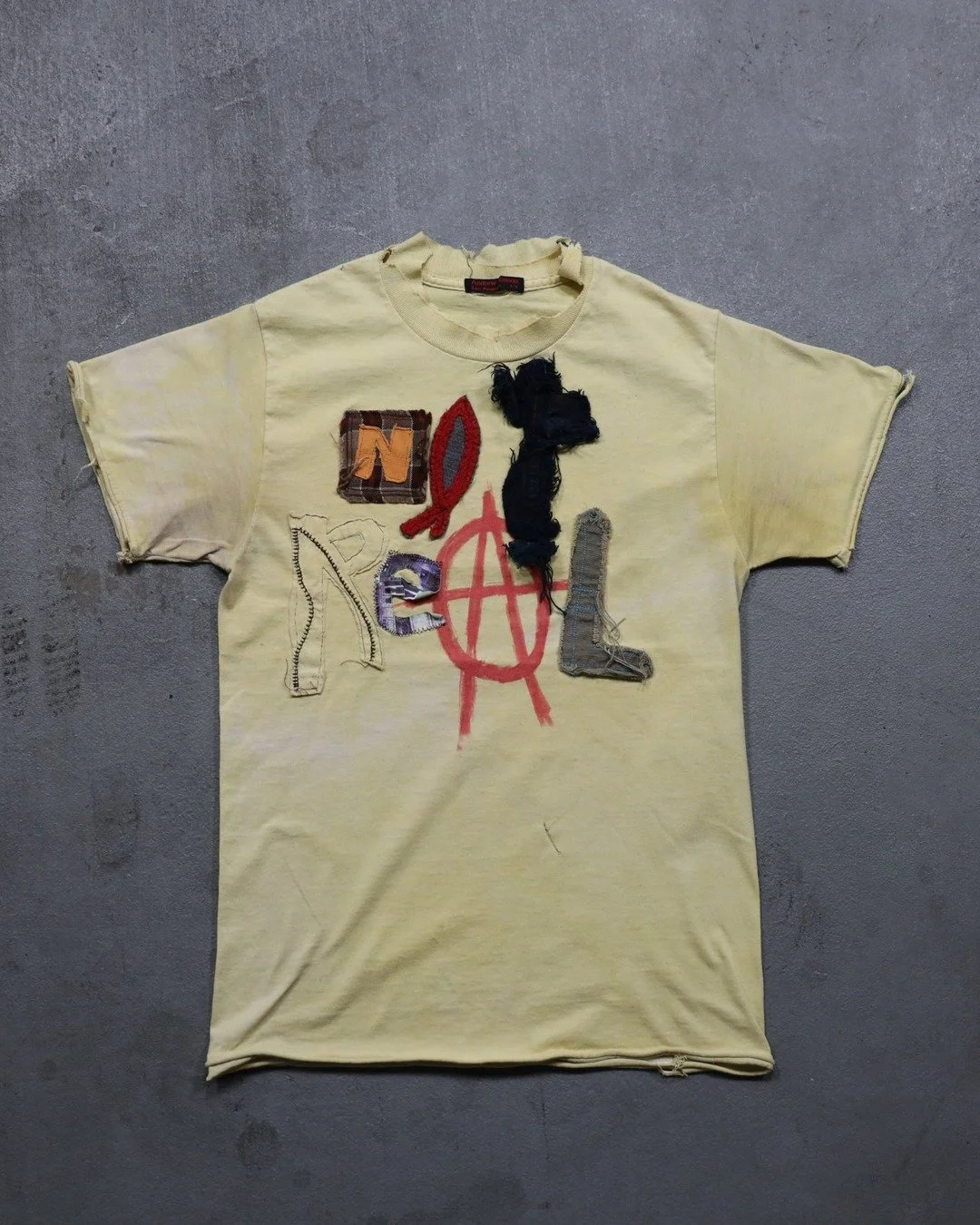
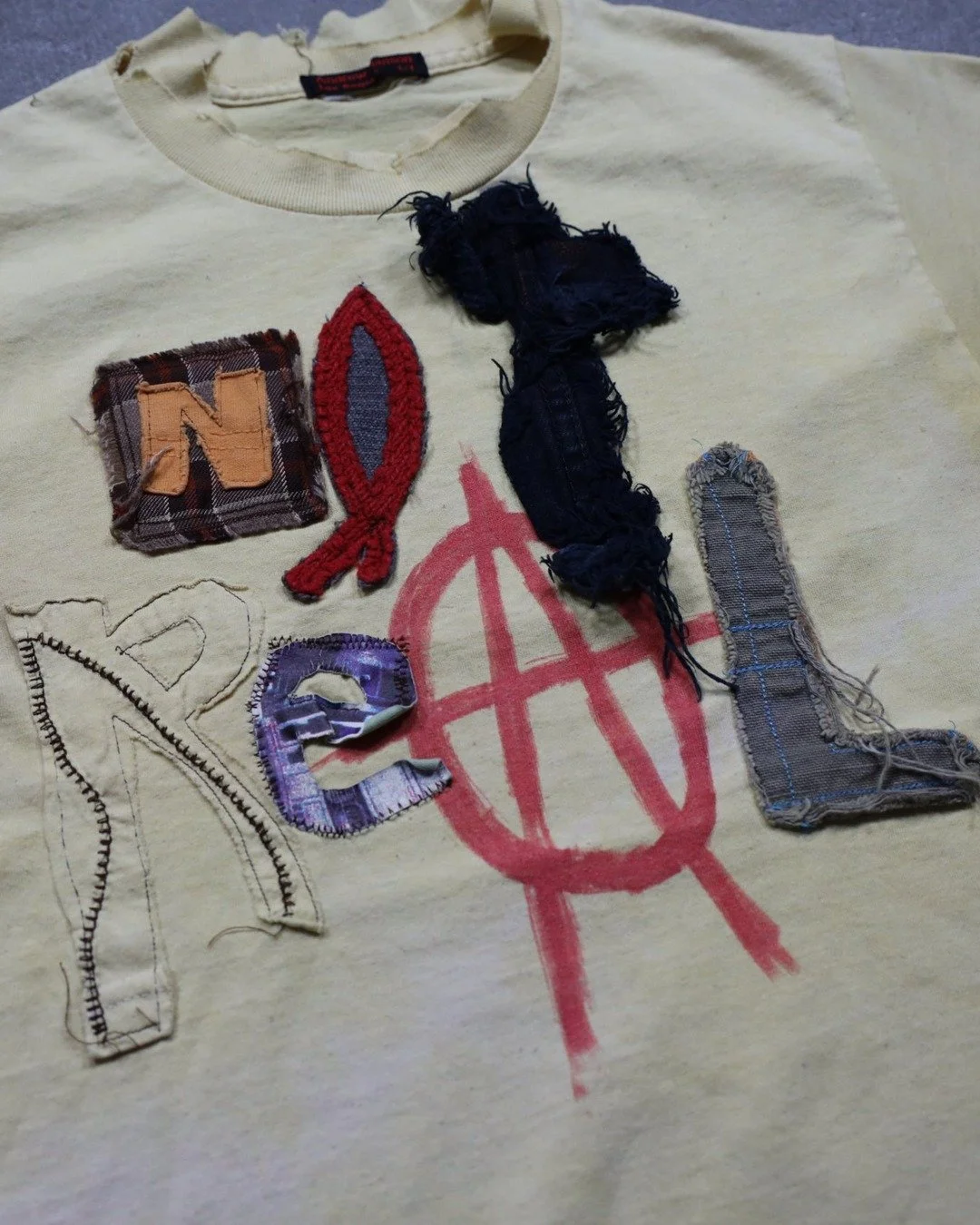
Not Real, 2000. One of one. Seven letters, each cut from a different fabric and sewn on by hand, with a red anarchy A painted through the middle.
Spelling out “Not Real”
Each letter is an appliqué cut from something in my life, finished with fabric marker:
N: plaid, a nod to punk rock
O: a Jesus fish, made from a sweater I had and my computer chair
T: a blue cross, cut from a pair of denim jeans a friend gave me
R: another t-shirt I chopped up, the same color as the shirt, so it’s there and not there at the same time
E: R2-D2, cut from an R2-D2 shirt I had. I love Star Wars
A: for anarchy, obviously
L: a piece of linen I had lying around
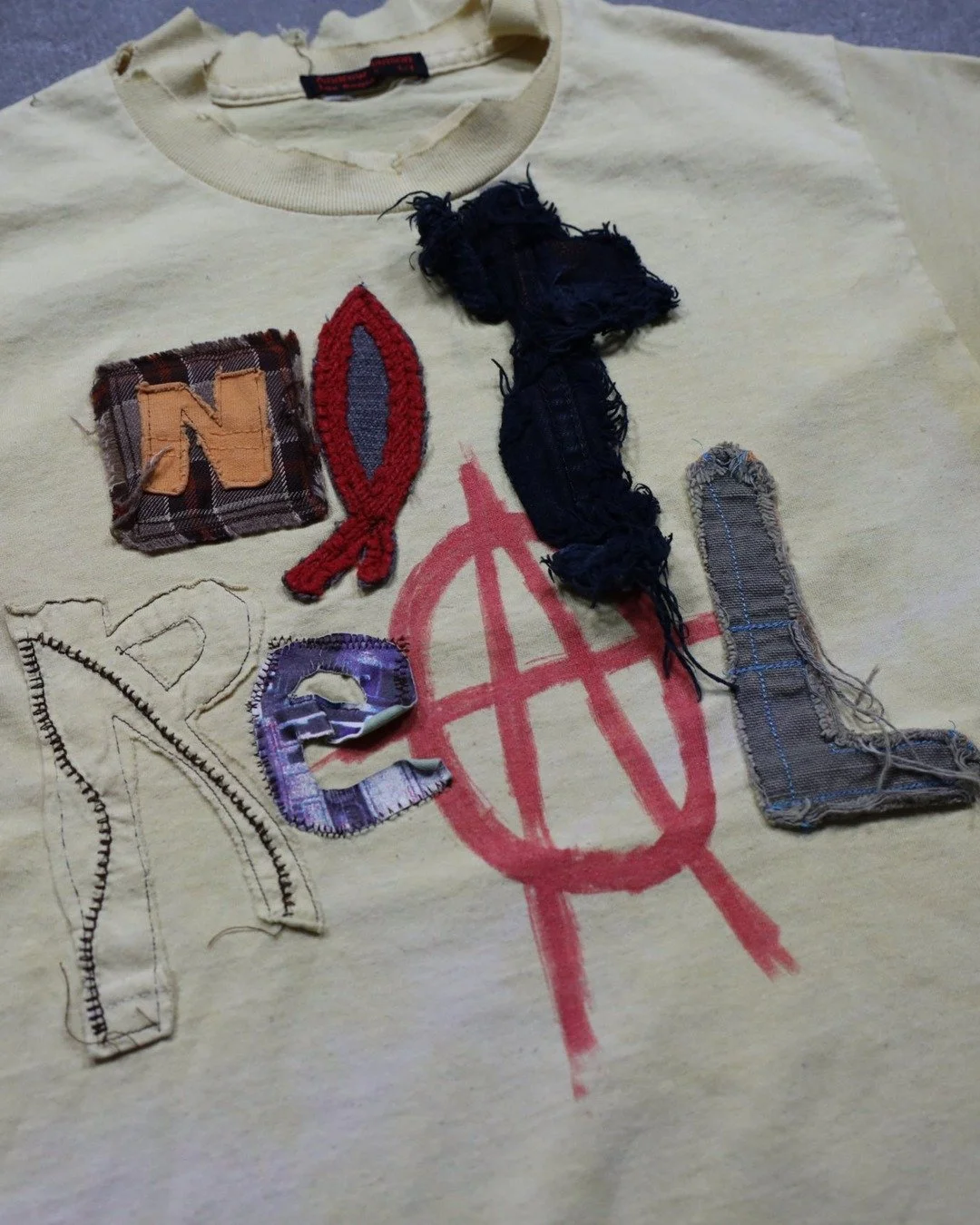
Every letter is a different fabric: plaid, red loop knit, frayed denim, printed jersey, canvas. No two are stitched the same way.
The sleeves
The way I cut the sleeves was strategic. I didn’t just chop them. I cut big gashes, then rolled and pulled the fabric out. That technique came from Sam Kieth, the artist who illustrated The Maxx, one of my favorite comic books growing up.
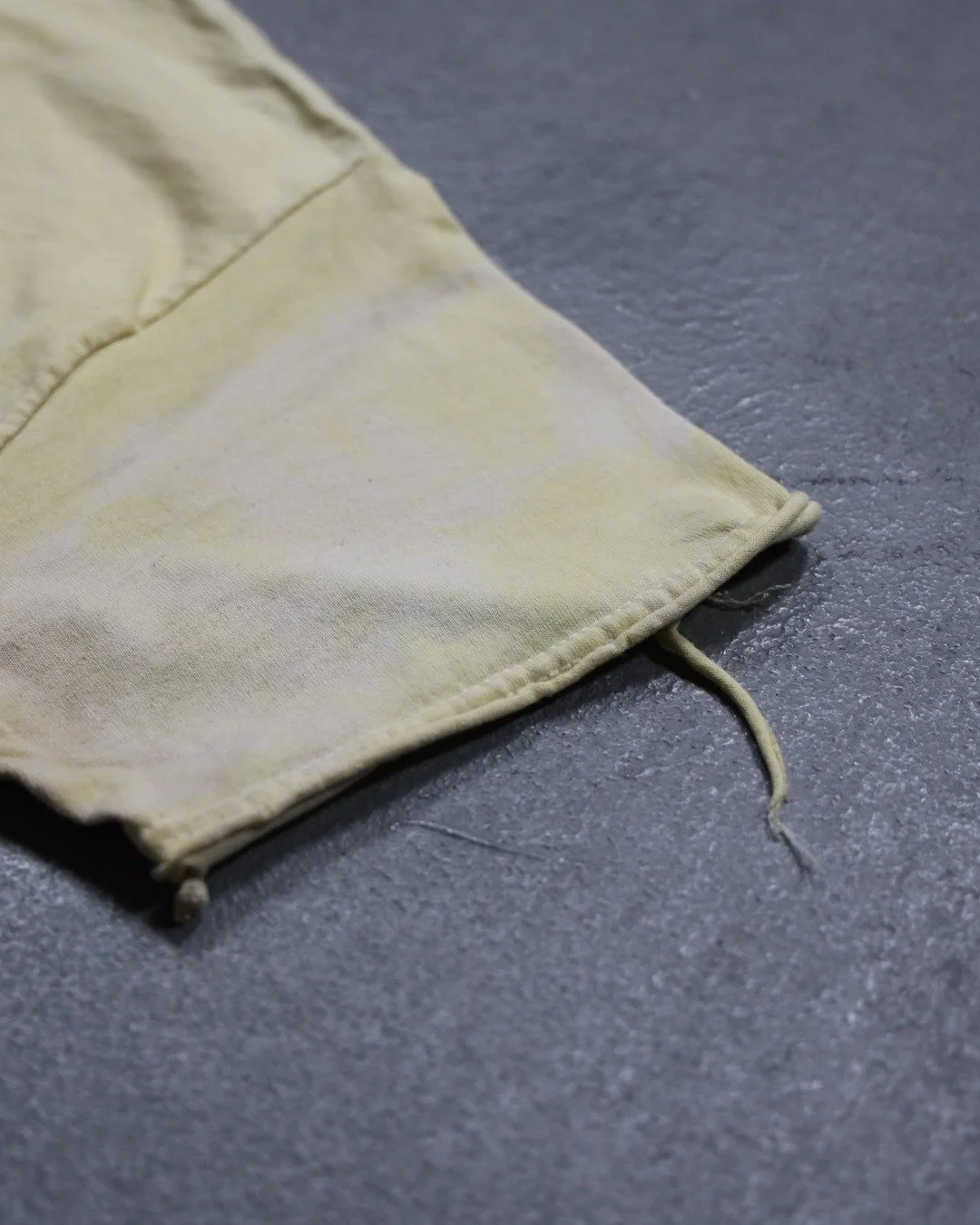
Sleeves cut raw, threads left hanging. Twenty-plus years of wear, kept as is.
Where it started
Looking at it now, a lot of what I still do started right here: hand-dyeing, cutting up pieces of my own life and turning them into something new, and making clothing that asks a question.
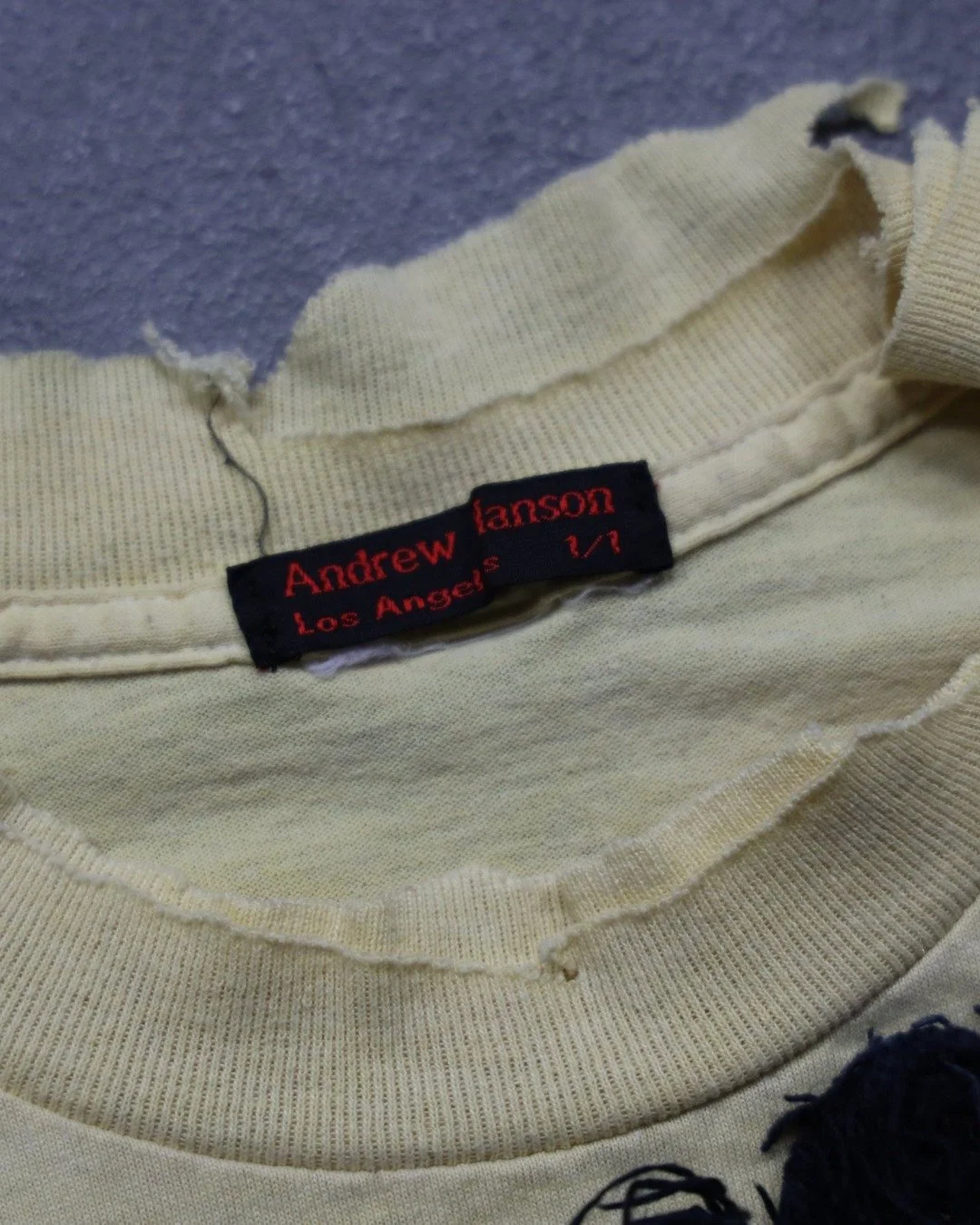
The label says it: Andrew Hanson, Los Angeles, 1/1.
Featured Posts
Made in 2002 for a fashion show that never happened. A burned flag, a folk hero’s fist and a lyric I still stand behind.